

There is a particular kind of frustration that comes from finishing a long day of physical work, getting home and realising that the working day is not actually over. There are job notes to write, photographs to organise, customer messages to answer and reports that should have been completed earlier in the week. The tools have been put away, but the paperwork is still waiting.
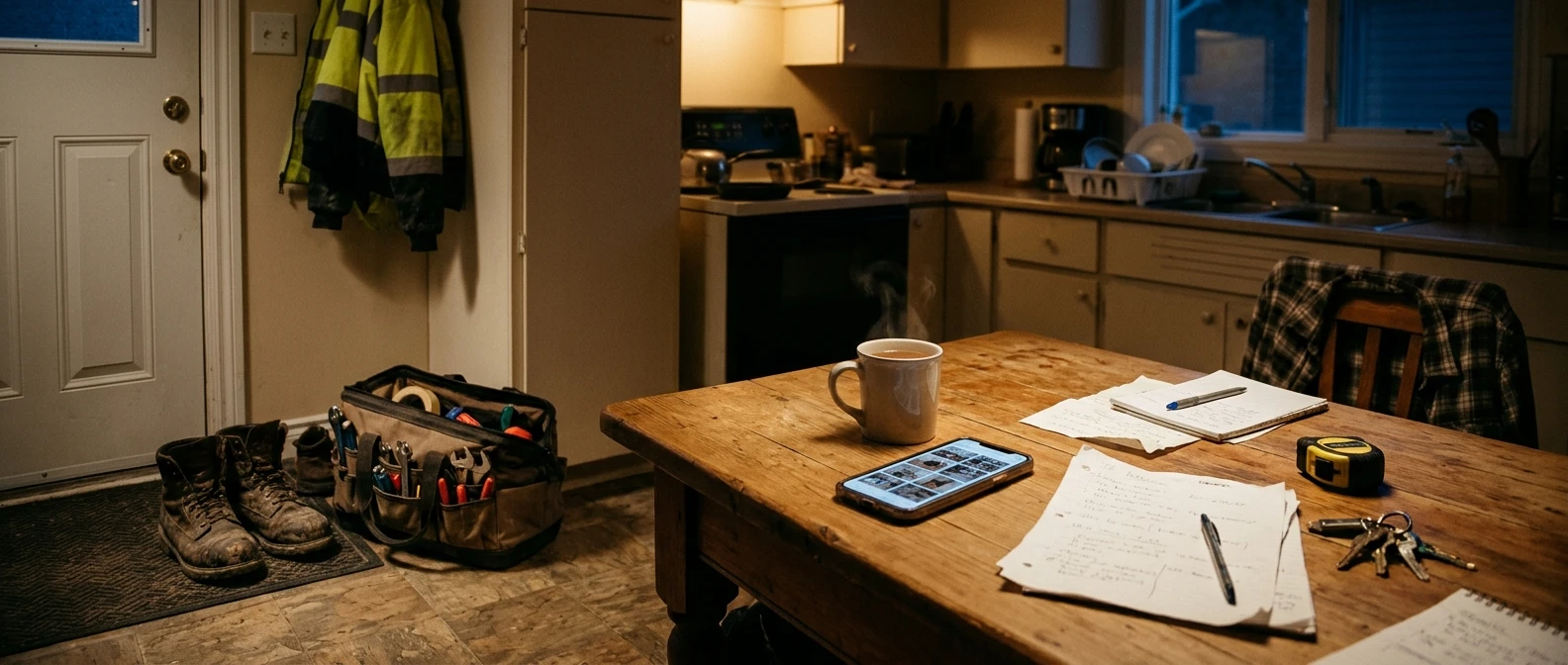
For many UK tradespeople, this is a familiar routine. Whether you work as a plumber, electrician, builder or maintenance contractor, administration has a habit of expanding to fill whatever time remains after the actual work has finished.
Some paperwork is unavoidable. Customers need invoices, businesses need accurate records and certain types of work require specific certificates or technical documentation. The problem is not that paperwork exists. It is that much of the time spent dealing with it is unnecessary.
Information gets written down several times, photographs are transferred between devices and reports are assembled from notes scattered across different locations. A job that took an hour to complete can sometimes generate another twenty minutes of administration.
Reducing paperwork is therefore not about ignoring important responsibilities. It is about organising information properly and removing repetitive tasks that add little value to the business.
Why Paperwork Becomes a Problem for Trade Businesses
Most small trade businesses do not begin with a carefully designed administrative system. A sole trader might start with a notebook, a phone and an email account. Customer details are written down when necessary, photographs are stored in the phone gallery and invoices are prepared when the work is finished.
This approach may be perfectly manageable when the business completes a relatively small number of jobs. However, as the workload increases, the limitations become more noticeable.
Customer information may be recorded in several different places. Job photographs become mixed together. Supporting documents are saved in email folders, while descriptions of completed work remain in notebooks or messages.
When somebody needs a professional report, all that information must be located and brought together. The process can be frustrating because the information already exists, but it has not been organised in a useful way.
For businesses employing several engineers, the problem can become more complicated. Different employees may record information differently, leaving office staff to chase missing details before reports can be completed.
The result is an administrative process that consumes time without necessarily improving the quality of the records.
Find Out Where Your Time Is Actually Going
Before changing the way your business handles paperwork, it is worth understanding which tasks are creating the biggest problems.
Think about what happens after a typical job. Do you need to copy customer details into several documents? Are photographs transferred manually from your phone? Do you spend time rewriting notes because the original information was incomplete? Does somebody need to contact the engineer to clarify what work was carried out?
These tasks may seem insignificant individually, but they can accumulate over a busy week.
Consider a contractor completing fifteen jobs each week. If inefficient paperwork adds just fifteen unnecessary minutes to each job, that represents almost four hours of additional administration. Over forty working weeks, the total reaches approximately 150 hours.
That is a substantial amount of time spent on tasks that may be improved through better organisation.
The calculation is only an illustration, and actual savings will depend on the business. Nevertheless, it demonstrates why small administrative inefficiencies deserve attention.
Rather than introducing new software immediately, identify the repeated tasks that could be simplified or eliminated.
Stop Entering the Same Information Repeatedly
One of the most common sources of unnecessary paperwork is repeated data entry. A customer’s name and address may be written in a diary, copied onto a job sheet, entered into a report and then typed again when preparing an invoice.
Although different documents serve different purposes, there is often no practical reason to enter the same basic information repeatedly.
A more organised process allows customer and job details to be recorded accurately at the beginning and used whenever they are needed.
This can reduce the likelihood of mistakes as well as save time. Every time information is copied manually, there is an opportunity for an incorrect address, date or reference number to be introduced.
The objective is not necessarily to combine every business activity into one complicated system. Accounting, scheduling and specialist compliance processes may still require separate tools.
However, information relating to a particular job should be organised in a way that avoids unnecessary duplication.
Record Important Details While You Are on the Job
Leaving paperwork until the evening is tempting, particularly when the working day is busy. Unfortunately, it often creates more work than it saves.
After completing several jobs, remembering the exact details of each one can become difficult. A contractor may recall replacing a component but struggle to remember its specification. Photographs might be mixed together, and brief notes written earlier in the day may no longer make complete sense.
Recording information while the work is being completed can prevent these problems.
A short description of the fault, details of the repair and relevant photographs can be captured while the information is fresh. Any additional observations can also be recorded before leaving the property.
This does not mean stopping work every few minutes to complete lengthy forms. The process should be proportionate to the job and practical for the person carrying it out.
A few minutes spent recording accurate information can reduce the time required to prepare documentation afterwards.
Keep Job Photographs Organised
Photographs are one of the most useful forms of job documentation, but they can also become a source of administrative frustration.
Many tradespeople have hundreds of photographs stored on their phones. Some show completed repairs, while others record measurements, equipment labels or problems that required investigation.
When these images are not associated with the correct job, finding them later can be difficult.

Imagine a property manager requesting photographs from a repair completed six weeks earlier. If the contractor has to scroll through hundreds of unrelated images, a simple request becomes another administrative task.
Keeping photographs with the relevant job information makes the process easier. It also reduces the likelihood of images being included in the wrong report.
Our guide to job photos and records for tradespeople explains how to make photographic documentation more useful.
Create a Consistent Reporting Process
One of the easiest ways to reduce paperwork is to stop preparing every job report from scratch.
Most trade jobs share certain basic information. There is a customer, a location, a date, a description of the work and a record of what was completed. Depending on the job, there may also be photographs, materials, equipment details and supporting documents.
Using a consistent reporting structure means the business does not need to decide how to organise the information every time.
This is particularly valuable for companies with several employees. If everyone follows a similar process, reports become easier to prepare and review.
Consistency also benefits customers. A property management company receiving regular reports from the same contractor may find it easier to locate information when the documents follow a familiar format.
The aim is not to make every report identical. Different jobs require different levels of detail. However, the basic structure can remain consistent while allowing relevant information to be included.
Our article on creating a professional job completion pack explains how to organise completed work into a clear customer report.
Reduce the Number of Places Where Information Is Stored
A surprisingly large amount of administrative time is spent searching for information rather than creating it.
Customer instructions might be in an email, photographs on a phone, job notes in a notebook and certificates in a folder on a computer. Preparing a report then involves bringing together information from several different locations.
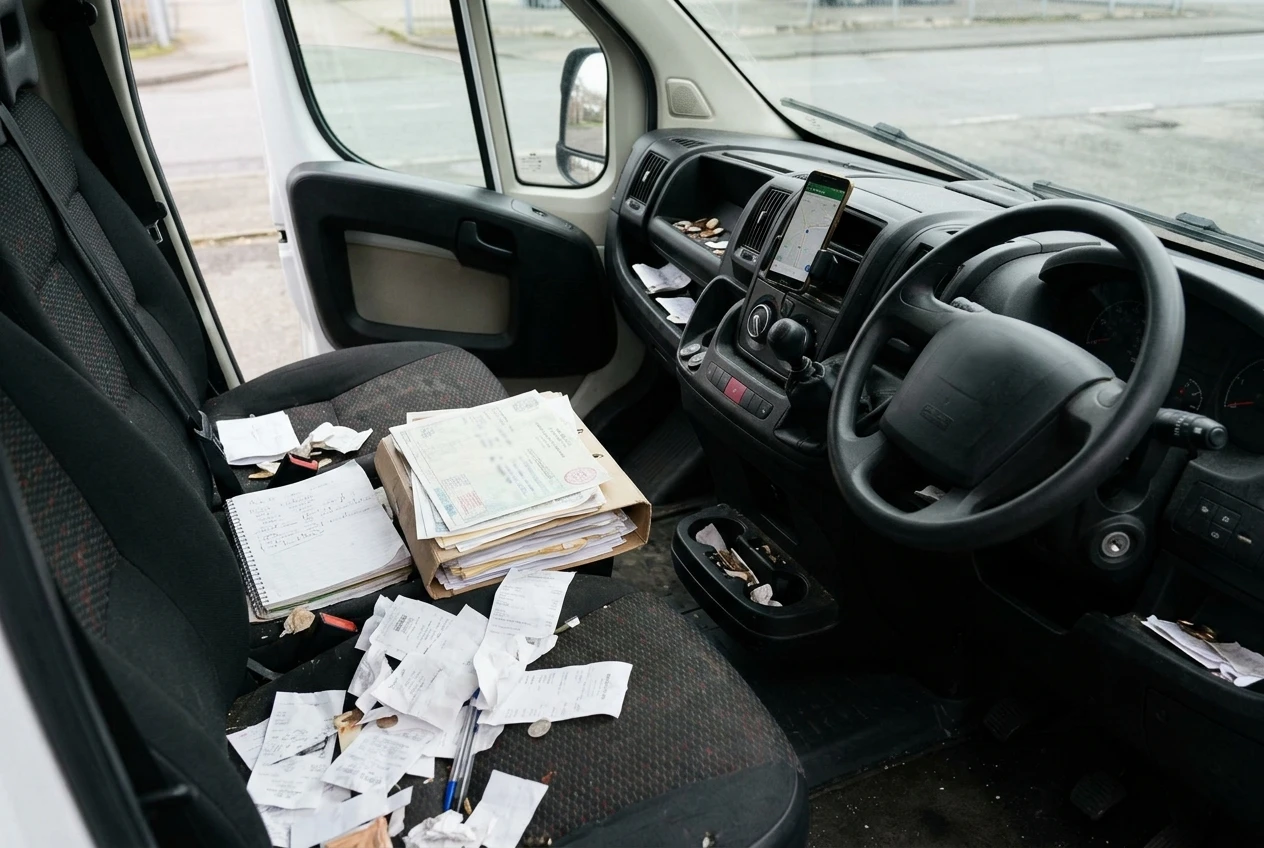
This is inefficient because each additional step creates another opportunity for something to be overlooked.
A more organised process keeps related information together. Customer details, descriptions, photographs and supporting documents should be associated with the relevant job wherever practical.
This does not mean every business needs a large management platform. For some contractors, a straightforward job documentation system may be sufficient.
The important thing is to choose an approach that matches the way the business operates.
A sole trader completing domestic repairs will have different needs from a facilities maintenance company managing numerous employees and properties. Both can benefit from better organisation, but the most suitable solution may differ.
Make Administration Easier for Employees
As a trade business grows, paperwork becomes a responsibility shared by several people. Engineers may collect information on site, while office staff prepare reports and communicate with customers.
If the process is unclear, problems can develop quickly. One employee may provide detailed notes and photographs, while another sends only a brief message confirming that the work is finished.
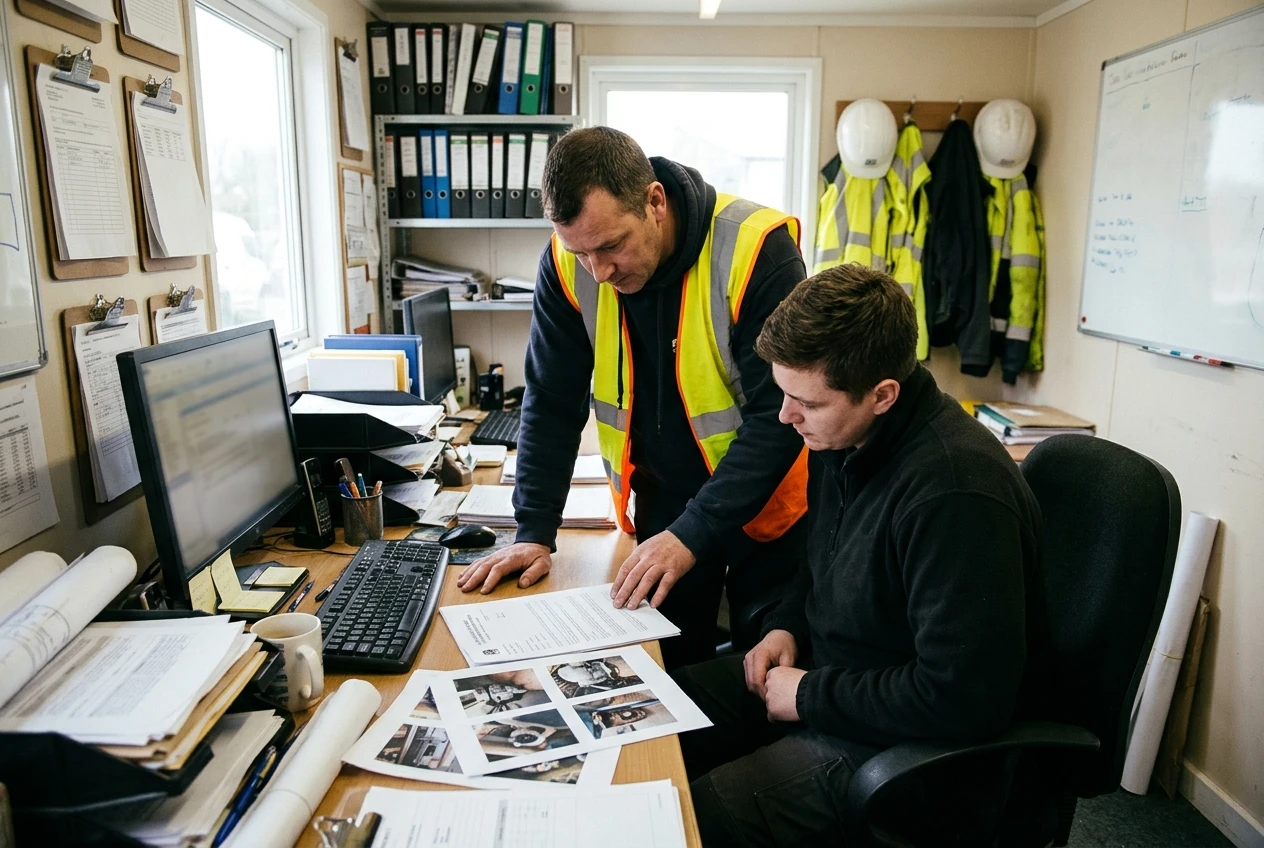
Office staff then have to contact engineers for missing information, sometimes several days after the job.
A consistent documentation process helps establish expectations. Employees understand which details should be recorded, and the office knows what information should be available.
However, the process must remain practical. If recording a simple repair involves completing numerous unnecessary fields, employees may become frustrated and avoid using the system properly.
Good administration should support the people carrying out the work rather than creating additional obstacles.
Why Better Paperwork Can Improve Customer Service
Reducing paperwork is often discussed as a way to save time, but it can also improve the experience customers receive.
When job records are organised, businesses can respond more quickly to requests for information. A landlord asking for details of a previous repair can be provided with the relevant report without somebody spending hours searching through old messages.
Commercial customers may particularly appreciate this level of organisation. Facilities managers and property management companies often need documentation relating to maintenance activities across several buildings.
Clear records can make a contractor easier to work with, especially when customers require regular reports.
Professional documentation may also help customers understand what has been completed and identify any recommendations for future work.
Good communication does not replace quality workmanship, but it contributes to the overall impression a business creates.
Do Not Cut Corners With Essential Records
Reducing paperwork should never involve ignoring legal, regulatory or contractual responsibilities.
Certain trades require specific certificates, inspection records or technical documentation. Electrical installations, gas work and construction activities may involve requirements that cannot simply be replaced with a general job report.
Businesses must continue to meet those obligations.
The same applies to appropriate health and safety records, financial documentation and other information that must be retained.
The objective is to eliminate unnecessary duplication and improve organisation, not reduce the accuracy or completeness of essential records.
A good digital documentation process should make important information easier to manage while supporting responsible working practices.
For a wider explanation of what should be recorded, read our complete guide to job documentation for trades.
How Digital Job Reports Can Reduce Administration
Digital job reporting can help businesses avoid some of the repetitive tasks associated with manual paperwork.
Instead of recording information on paper and transferring it into a separate document afterwards, relevant details can be organised electronically.
Photographs, notes and supporting documents can be associated with the correct job, making it easier to prepare a professional completion report.
This can be particularly useful for contractors completing numerous jobs each week. A consistent process reduces the need to reconstruct work from disconnected records and can improve the quality of the information available.
The actual time saved will depend on the business and how effectively the system is used. Nevertheless, reducing unnecessary steps is a sensible goal for almost any trade operation.
Our guide to digital job reports for trade businesses explores the benefits of moving away from traditional reporting methods.
How ProofPackUK Helps Tradespeople Spend Less Time on Paperwork
ProofPackUK has been developed around the everyday documentation needs of UK tradespeople and trade businesses.
The platform allows users to organise customer details, job descriptions, photographs, notes, materials, equipment information and supporting documents within a consistent reporting process.
This information can then be brought together into professional PDF job completion packs.
For sole traders, the benefit is a more straightforward way to prepare customer documentation without manually assembling reports from several different sources. For growing businesses, it offers a consistent approach to recording completed work.
Contractors working with landlords, property managers and commercial customers may also benefit from being able to prepare clear reports containing the relevant job information.
The purpose is simple. Businesses should spend less time dealing with avoidable administrative work and more time concentrating on their customers and the services they provide.
Summary
Paperwork is part of running a professional trade business, but excessive administration does not have to be.
Many of the frustrations associated with job reporting come from repeated data entry, scattered information and inconsistent processes. These problems can often be improved without making the business more complicated.
Recording information while it is fresh, keeping photographs with the correct job and using a consistent reporting format can make everyday administration easier.
The biggest improvement often comes from changing the way information is collected rather than simply trying to complete paperwork more quickly.
For tradespeople who regularly spend evenings searching through photographs, rewriting notes or preparing reports, a more organised approach could make a meaningful difference.
Visit www.proofpackuk.com to discover how professional digital job documentation can help your trade business reduce unnecessary paperwork and create clear PDF completion packs.
All the best!
Eamon