

There is a familiar situation that most tradespeople will recognise. You finish a job, pack away your tools, explain everything to the customer and head off to your next appointment. The work is complete, the customer seems happy and there is nothing particularly memorable about the day.
Three months later, your phone rings. The customer wants to know exactly what was repaired, which materials were used or whether a particular part of the installation was included in the original work. Suddenly, what seemed like a straightforward job becomes a frustrating exercise in searching through old photographs, messages and notebooks.
This is where proper job documentation makes a difference. It might not be the most exciting part of running a plumbing, electrical, building or maintenance business, but it can be one of the most valuable. Keeping accurate records of completed work helps tradespeople stay organised, answer customer questions and demonstrate what has actually been done. More importantly, it prevents small administrative problems from becoming expensive distractions.
For many small trade businesses, documentation develops without much planning. A notebook is used for recording measurements, photographs are stored on a phone, customer instructions arrive through text messages and certificates are saved in email folders. Each method works reasonably well on its own, but the problems begin when information needs to be brought together. What should take a few minutes can easily become an hour of unnecessary searching.
The good news is that professional job documentation does not have to involve complicated systems or endless paperwork. With a consistent approach, even a sole trader completing several jobs each day can maintain clear, useful records without spending every evening sitting in front of a computer.
What Is Job Documentation and Why Does It Matter?
Job documentation is simply the process of recording important information about work carried out for a customer. This normally includes details of the customer, the property or site, the work undertaken, materials used, relevant photographs and any supporting documents. Depending on the trade and the nature of the job, it may also include inspection information, test results, certificates and recommendations for future work.
The purpose is to create a reliable record that can be understood by somebody who was not necessarily present when the work was completed. That person might be the customer, a property manager, another contractor or somebody within your own business. A useful record should explain what happened without requiring the original tradesperson to remember every detail.
Consider a plumbing contractor who replaces a damaged section of pipework in a rented property. At the time, the repair might seem completely routine. However, six months later, the landlord could request details because another problem has developed nearby. If the contractor recorded the location of the repair, the materials used and photographs of the completed work, the information can be retrieved relatively easily.
Without those records, the contractor may have to rely on memory or spend time searching through unrelated photographs.
The same principle applies to electricians, builders, heating engineers, roofers and property maintenance contractors. Every trade produces information during the course of its work. The question is whether that information is being organised in a way that remains useful afterwards.
The Real Cost of Poor Job Records
Poor documentation rarely causes an obvious problem immediately. Most jobs are completed without disputes, and many customers never request additional information. This can create the impression that detailed records are unnecessary. Unfortunately, the consequences tend to appear when a business is already busy dealing with something else.
Imagine receiving a call from a commercial customer requesting completion details for several maintenance visits carried out during the previous month. The engineer who completed the work remembers most of the jobs but cannot locate all the photographs. Some notes were written on paper worksheets, while other details were sent to the office through messages. Somebody now has to gather everything together, check the information and prepare a report.
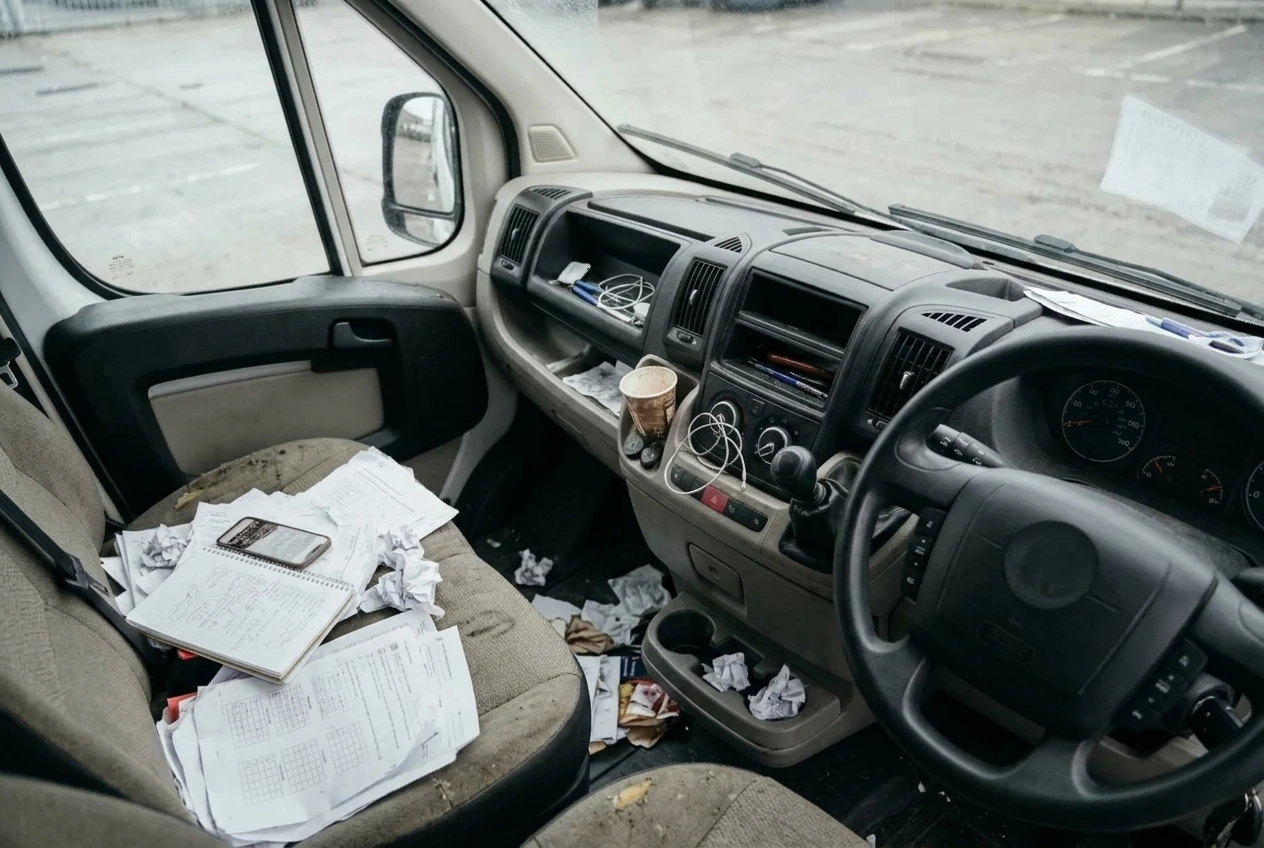
Even if the records are eventually found, the process consumes time that could have been spent on productive work. If this happens regularly, the administrative cost becomes significant. A business completing twenty jobs each week could lose several hours simply because its information is scattered across different locations.
There is also the question of accuracy. When reports are prepared days or weeks after a job, important details can be forgotten. The engineer may remember replacing a component but not its exact specification. Photographs may be difficult to identify, particularly when several similar properties were visited on the same day. Information reconstructed from memory is rarely as dependable as information recorded at the time.
Better documentation reduces these problems by making record keeping part of the normal working process rather than something that has to be dealt with afterwards.
What Information Should Tradespeople Record?
The information required will naturally depend on the type of work being completed. A small domestic repair does not need the same documentation as a commercial installation or major refurbishment project. Nevertheless, most jobs benefit from a consistent set of basic details.
Customer information and the job location should always be recorded accurately. This is particularly important for contractors working across multiple properties owned or managed by the same organisation. A property maintenance company might complete several jobs for one landlord during a single week, making clear addresses and job references essential.
The description of the work should explain what was actually done rather than relying on vague statements. Writing that a leak was repaired provides very little information. A more useful description would identify where the leak was found, which component was affected, what repair was completed and whether any relevant checks were carried out afterwards. The description does not need to be unnecessarily long, but it should provide enough detail to make the record meaningful.
Photographs can add considerable value, particularly when they show the condition of an area before work begins and the finished result. They can also record important stages of an installation that will later be concealed. However, photographs should be connected to the correct job and accompanied by enough information to explain what they show. A collection of unidentified images is not a particularly effective record.
Materials, equipment details and supporting documents may also be relevant. If a particular component has been installed, recording its make or model can help with future maintenance. Where certificates or inspection records are required, these should be completed by appropriately qualified people and retained according to the applicable requirements.
A professional job report can bring this information together, but it does not replace any statutory certification or technical documentation that must be issued separately.
Why Photographs Are Becoming Essential Job Records
Photographs have become a normal part of working life for many tradespeople. Almost everyone carries a smartphone, making it easy to record the condition of an installation, document a repair or show a customer what has been completed. Yet there is an important difference between taking photographs and maintaining useful photographic records.
A photograph without context can be difficult to interpret. It might show a repaired section of pipework, but unless it is associated with the correct customer and job, its usefulness is limited. This becomes particularly noticeable when contractors carry out similar work across numerous properties.
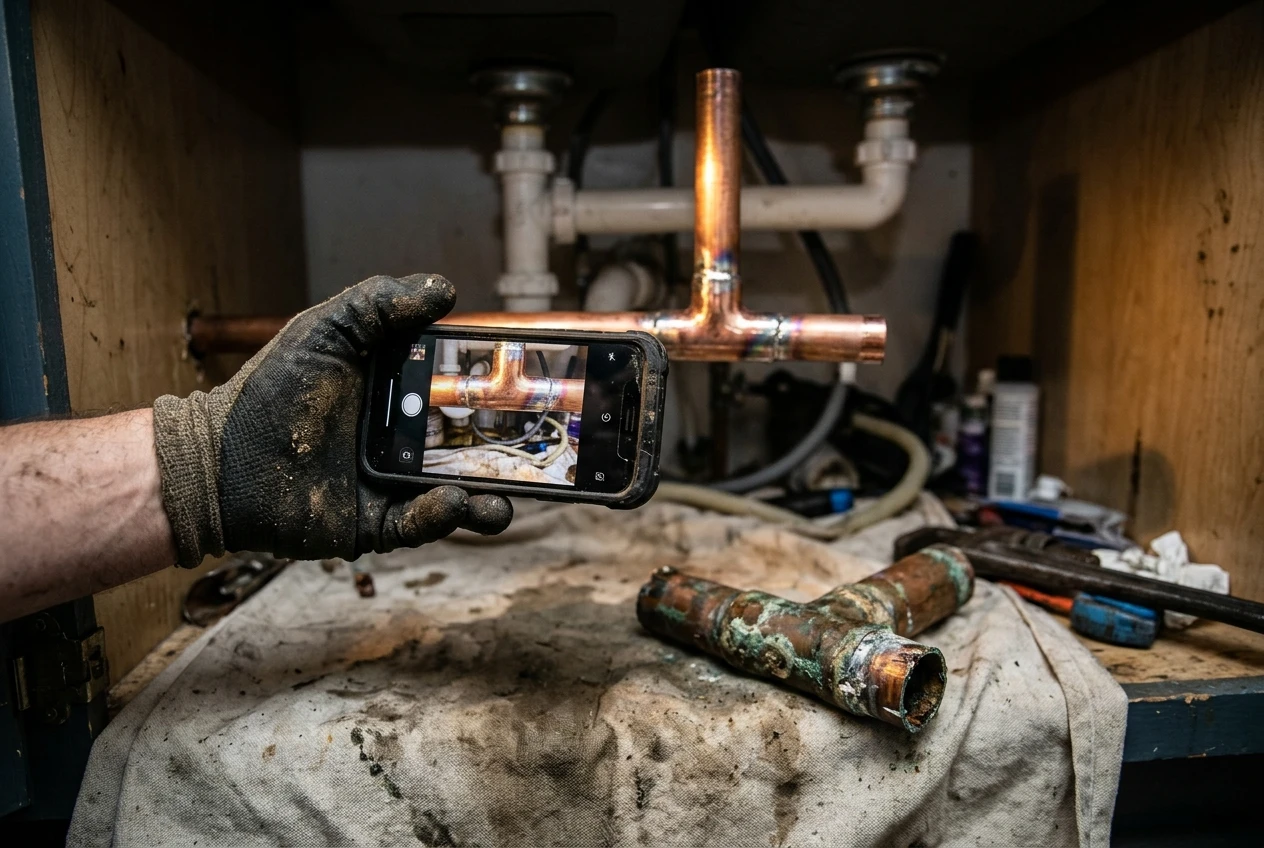
For example, a facilities maintenance engineer might photograph ten different repairs during a busy week. If those images remain mixed together in a phone gallery, identifying the correct photographs several months later can become surprisingly difficult. If the images are stored alongside the relevant job details, the information is much easier to retrieve.
Photographs can also improve communication with customers who were not present during the work. A landlord may want to see the condition of a damaged area before and after a repair. A facilities manager might need evidence that a maintenance task has been completed. Clear images supported by accurate written descriptions can help explain what happened.
There are sensible limits, of course. Photographs should be relevant to the work, and businesses should respect customer privacy. Images containing personal information must be handled appropriately, and photographs should never be presented as proof of technical compliance where proper testing or certification is required.
For a more detailed look at this subject, read our guide to job photos and records for tradespeople.
How Professional Documentation Improves Customer Confidence
Most customers cannot judge every technical aspect of the work completed by a tradesperson. They rely on the contractor’s expertise and expect the work to be carried out properly. Clear documentation helps them understand what they have paid for and provides information they can refer to in the future.
This is particularly valuable for commercial customers. A property manager responsible for several buildings may arrange dozens of maintenance visits each month. They cannot personally attend every appointment, so they depend on accurate information from the contractors completing the work. A professional completion report provides a clearer account than a brief message confirming that the job is finished.
Domestic customers can benefit too. Someone having a bathroom refurbished may appreciate receiving a record of the work, including relevant photographs and information about installed components. A homeowner arranging electrical repairs may want documentation that can be retained with other property records.
Professional reporting can also help distinguish a business from competitors. Two contractors may complete similar work to an equally high standard, but the one who provides clear, organised documentation may create a more reassuring customer experience.
This does not mean that attractive reports can compensate for poor workmanship. They cannot. The actual quality and safety of the work must always come first. However, good documentation supports professional service by making information easier to understand and retrieve.
The Importance of Job Completion Packs
A job completion pack brings together the relevant information about completed work into a clear document or collection of documents. It may include the customer details, job description, photographs, materials, completion notes and any supporting certificates or records.

The amount of detail will depend on the job. A small domestic repair might only require a concise report, while a commercial maintenance contract may involve more extensive documentation. The important point is that the information is presented consistently and accurately.
For contractors completing regular maintenance, a completion pack can be especially useful. It provides a record that the customer can retain and allows the business to refer back to the work when necessary. Instead of sending photographs, notes and documents separately, the relevant information can be presented together.
Preparing these packs manually can become time consuming, particularly when a business completes numerous jobs each week. This is one reason why digital documentation is increasingly attractive to trade businesses looking to improve their administration.
Our guide to creating a professional job completion pack explains what should be included and how to prepare one that is useful to customers.
Why Digital Job Documentation Makes Practical Sense
Traditional paperwork is not necessarily wrong, but it can become inefficient when information is stored in several different places. A paper worksheet might contain the job description, while photographs remain on a phone and certificates are stored on a computer. Preparing a completion report then requires somebody to locate and combine everything.
Digital job documentation offers a more organised approach. Information can be associated with an individual job, making it easier to prepare reports and retrieve previous records. This can reduce unnecessary duplication and improve consistency, particularly when several employees are involved.
For a sole trader, the main benefit may be convenience. Recording information in a structured format can reduce the amount of time spent preparing reports after returning home. For a growing company, the advantages may include more consistent records across different engineers and fewer requests for missing information.
However, software should make the process easier rather than more complicated. A system requiring excessive data entry or lengthy training may simply replace one administrative problem with another. The best approach is to choose tools that match the way the business actually operates.
If paperwork is already taking up too much of your working week, our article on how to reduce paperwork in your trade business explores practical ways to improve the situation.
How ProofPackUK Helps Tradespeople Manage Job Documentation
ProofPackUK has been developed to address a straightforward problem faced by many UK tradespeople. Completing the physical work is only part of the job. Businesses also need a practical way to organise information and produce professional records of what has been completed.
The platform allows users to bring together customer information, job details, photographs, notes, materials, equipment information and supporting documents. This information can then be used to create professional PDF job completion packs without having to assemble everything manually from separate sources.
For a sole trader, this can provide a more organised way to document completed work. For a growing trade business, it offers a consistent approach to preparing customer reports. Contractors working with landlords, property managers and commercial customers may also find professional completion packs useful when communicating details of completed jobs.
The aim is not to create more paperwork. It is to make the documentation businesses already need easier to manage.
Our article on digital job reports for trade businesses explores the wider benefits of electronic reporting and what contractors should look for when choosing a system.
Making Better Documentation Part of Your Working Day
Improving job documentation does not require a complete overhaul of the business overnight. The most effective changes are often small adjustments to existing routines.
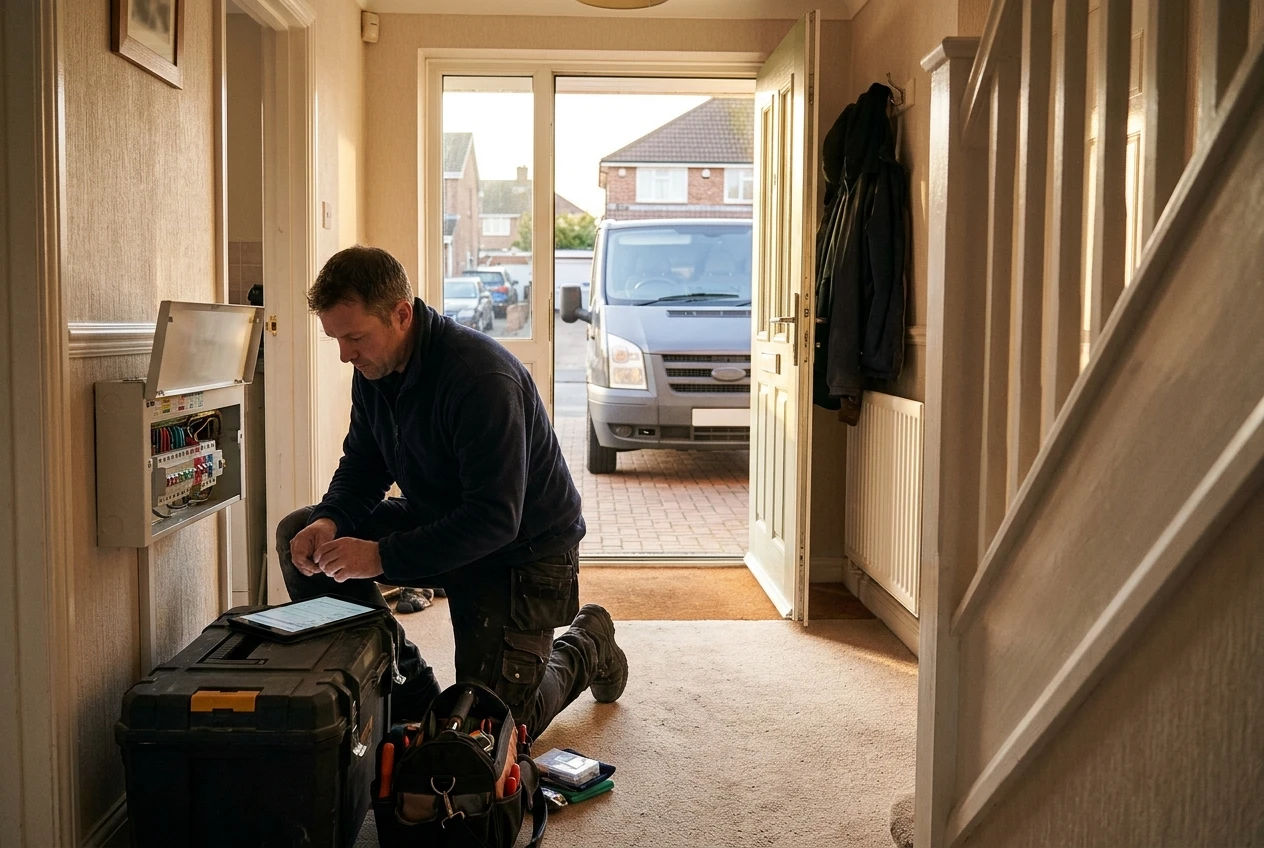
Start by making sure every job has an accurate customer record and a clear description of the work required. During the job, record important observations and take relevant photographs while the details are fresh. Before leaving, check that the necessary information has been collected and that any supporting documents are associated with the correct job.
This approach reduces the need to reconstruct events afterwards. It also makes it easier to prepare a completion report without searching through messages or trying to remember exactly what happened.
Consistency is particularly important. If documentation is completed thoroughly on some jobs but ignored on others, the business will continue to experience gaps in its records. Establishing a straightforward process that can be followed every day is usually more valuable than introducing an elaborate system that nobody wants to use.
As the business grows, reliable documentation can become even more important. More employees and more customers mean more information to manage. Having a consistent process from the beginning can make that growth easier to handle.
Final Thoughts
Professional job documentation is not about producing paperwork simply because it looks impressive. It is about creating reliable records that remain useful long after the work has been completed.
For tradespeople, those records can save time, support customer communication and reduce the frustration of searching for missing information. For customers, they provide a clearer understanding of the work undertaken. For growing businesses, they can improve consistency and make administration easier to manage.
The most important step is to stop treating documentation as an unpleasant task that can always be dealt with later. When accurate records become part of the normal working routine, the process becomes easier and the information becomes more dependable.
If your current system involves searching through phone photographs, notebooks and email attachments whenever a customer requests a report, there is a better way to manage it.
ProofPackUK helps UK tradespeople organise job information and create professional PDF completion packs without unnecessary administrative work. Visit www.proofpackuk.com to discover how the platform can help you take control of your job documentation.
All the best!
Eamon