

Take a look through the photo gallery on almost any busy tradesperson’s phone and you will probably find a familiar collection of images. There will be photographs of leaking pipes, damaged walls, electrical installations, equipment labels, building materials and completed repairs. Somewhere among them might be pictures of family holidays, pets and the occasional photograph taken accidentally while the phone was in a pocket.

Taking photographs has become such a normal part of working life that most tradespeople barely think about it. A problem is discovered, the phone comes out and a picture is taken. Sometimes the photograph is sent to a customer or colleague. Other times it is kept in case the information is needed later.
The difficulty is that taking photographs and maintaining useful job records are two very different things. An image may be valuable when it is captured, but that value can disappear if nobody can find it or explain what it shows several months later.
For plumbers, electricians, builders and maintenance contractors, properly organised job photographs can become an important part of professional documentation. They can help explain completed work, support customer communication and provide useful information when questions arise about previous jobs.
The key is to treat photographs as business records rather than leaving them as an unorganised collection of images.
Why Photographs Are Valuable in Trade Work
Photographs provide something that written descriptions cannot always achieve. They allow somebody to see the condition of an area or installation at a particular point in time.
Consider a builder repairing damage to a wall. A written description might explain that loose plaster was removed, the underlying surface was repaired and the area was finished. That information is useful, but photographs can provide additional context by showing the original damage and the appearance of the completed work.
For a plumber, photographs might show the condition of a leaking connection before replacement and the finished installation afterwards. An electrician may photograph relevant equipment details or stages of an installation. A roofing contractor might record damaged tiles and the area following repairs.
These images can be particularly useful when the customer is not present. A landlord arranging maintenance at a rental property may want to understand what was wrong and what the contractor did to resolve the problem. Photographs accompanied by an accurate explanation can help provide that information.
However, photographs should not be treated as a substitute for technical records. An image may show that equipment has been installed, but it does not independently establish that the installation has been tested correctly or complies with the relevant requirements.
The Importance of Before and After Photographs
Before and after photographs are among the most useful records a trade business can collect. They allow somebody reviewing the work to compare the original condition with the finished result.
This can be valuable for property maintenance, building repairs, decorating, roofing and many other types of work. A contractor repairing a damaged ceiling might photograph the affected area before starting and again once the repair has been completed. The customer can then see the visible change without needing to attend the property.
The photographs are most useful when they show comparable views. If the original image is taken from one side of a room and the completed photograph is taken from a completely different angle, it may be difficult to understand what has changed.
Lighting and image quality also matter. A photograph taken in poor light may not show the details that need to be recorded. Where safe and practical, taking a moment to capture a clear image can make the record considerably more useful.
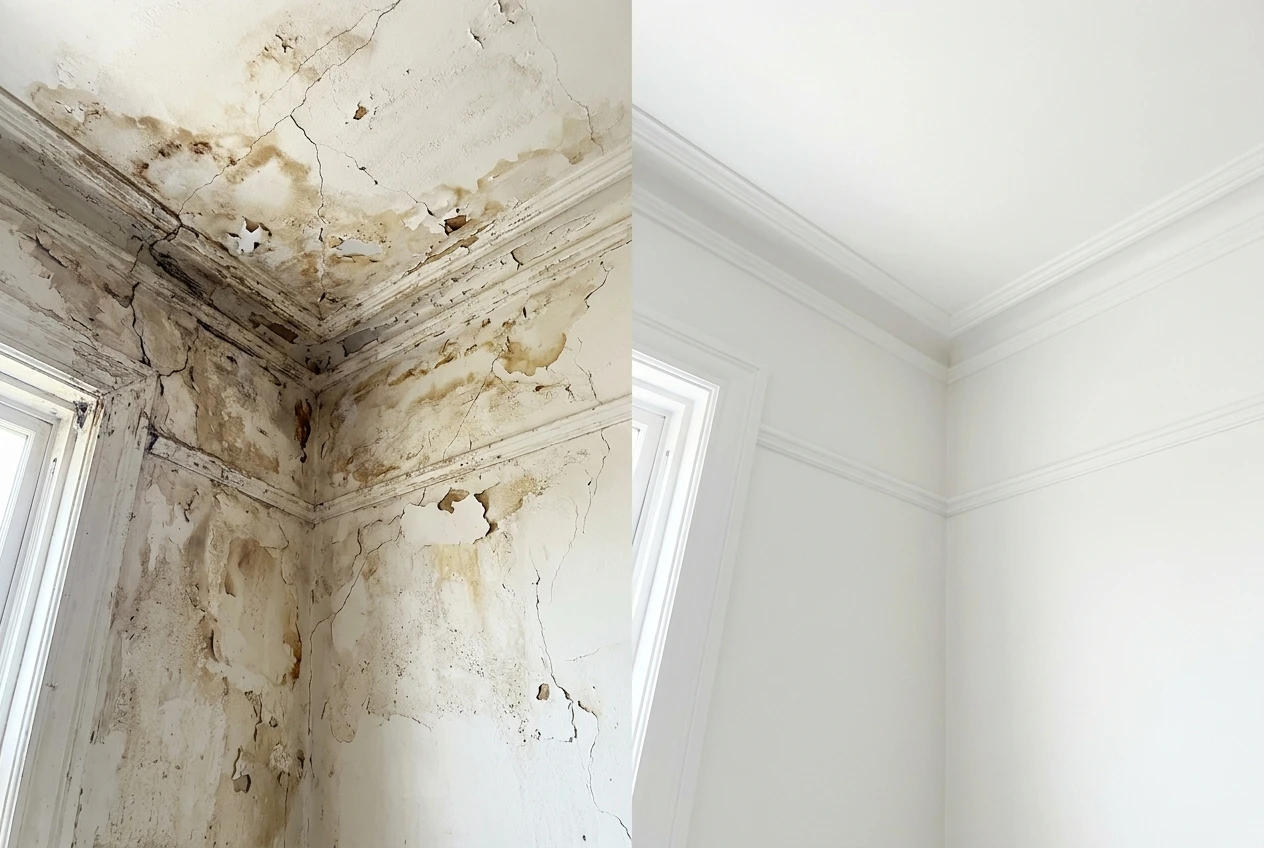
It is worth remembering that not every job requires numerous photographs. A simple repair may only need a few relevant images, while a more complicated installation may benefit from photographs taken at several stages. The aim should always be to record useful information rather than simply accumulate pictures.
Recording Work That Will No Longer Be Visible
Some of the most valuable job photographs are taken during the work rather than after it has finished. This is particularly true when installations or repairs will eventually be concealed.
A plumber installing pipework behind a wall may have an opportunity to photograph the arrangement before the area is enclosed. A builder might record relevant details before flooring or plasterboard is installed. An electrician may need appropriate records of certain installation stages before components become inaccessible.
Once the work has been covered, obtaining the same information may require significant disruption. Photographs can therefore provide useful background information for future maintenance or investigation.
However, the usefulness of these images depends on context. A close photograph of a pipe or cable may not reveal its location within the property. Taking an additional image showing the surrounding area can help establish where the work was carried out.
Contractors should also ensure that taking photographs does not interfere with safe working procedures. Documentation should support professional work, not distract from it.
Why Photographs Need Written Information
A photograph rarely tells the complete story of a job. It might show a damaged component, but without a description, somebody reviewing the image later may not know what caused the damage or whether the component was subsequently replaced.
This is why photographs should be connected to accurate job information. The customer’s details, property address, date of attendance and description of the work provide the context needed to understand the images.
Imagine a maintenance engineer photographing a replacement valve. If the image is stored alongside the correct job record, it can be identified relatively easily. If it remains among hundreds of unrelated photographs, finding it later may become difficult.
Written notes can also explain details that are not obvious from an image. A photograph might show a repaired fitting, while the accompanying description records why it was replaced and what relevant checks were completed.
Together, photographs and written records create a more useful account of the work than either would provide alone.
For a broader explanation of effective record keeping, read our complete guide to job documentation for trades.
How Job Photographs Help With Customer Communication
Customers frequently arrange work without being present throughout the job. This is particularly common for landlords, commercial property managers and facilities management companies.
A property manager responsible for several buildings may coordinate numerous repairs during a typical week. They cannot realistically visit every location to inspect each completed task. Instead, they depend on contractors to provide accurate information about what happened.
Photographs can make that communication clearer. A report showing the original problem and the finished repair allows the customer to understand the visible outcome. Written descriptions can then explain the work undertaken and identify any additional observations.
For domestic customers, photographs may also be useful when discussing repairs that are difficult to access or understand. A heating engineer might show a customer the condition of a component inside an appliance, while a roofing contractor could provide images of an area that cannot easily be viewed from the ground.
This approach can help customers understand the work without relying entirely on technical explanations.
Photographic Records and Customer Disputes
Disagreements sometimes arise about the condition of a property, the scope of work or damage discovered after a contractor has left. Accurate photographs may provide useful information when establishing what was visible at a particular time.
For example, a contractor working in a property might photograph existing damage near the area where repairs are being undertaken. If questions arise later, the original image could help explain the condition of the area before work began.
Similarly, photographs taken during and after a repair may help clarify which parts of an installation were addressed.
However, photographic evidence is not automatically conclusive. Its usefulness depends on authenticity, context, timing and the circumstances of the disagreement. An image may show the appearance of an installation without establishing whether it was functioning correctly.
Businesses should therefore avoid making exaggerated claims about the protection photographs provide. Good records can support an accurate account of events, but they do not guarantee that a dispute will be resolved in the contractor’s favour.
The most sensible approach is to record work honestly and consistently rather than attempting to reconstruct evidence after a problem has developed.
The Problem With Keeping Everything on a Phone
Smartphones are excellent tools for capturing photographs, but their standard galleries are not designed to manage complete business records.
As more jobs are completed, the number of images increases. Photographs from different customers become mixed together, and identifying a particular job may require scrolling through weeks or months of unrelated pictures.
This becomes especially frustrating when several employees are involved. One engineer may have the photographs on a personal device while somebody in the office is responsible for preparing the completion report. If the images have not been transferred and organised, the office may need to contact the engineer before the documentation can be completed.
There is also the possibility of photographs being lost when a device is damaged, replaced or reset. Businesses should therefore consider how important records are stored and backed up.
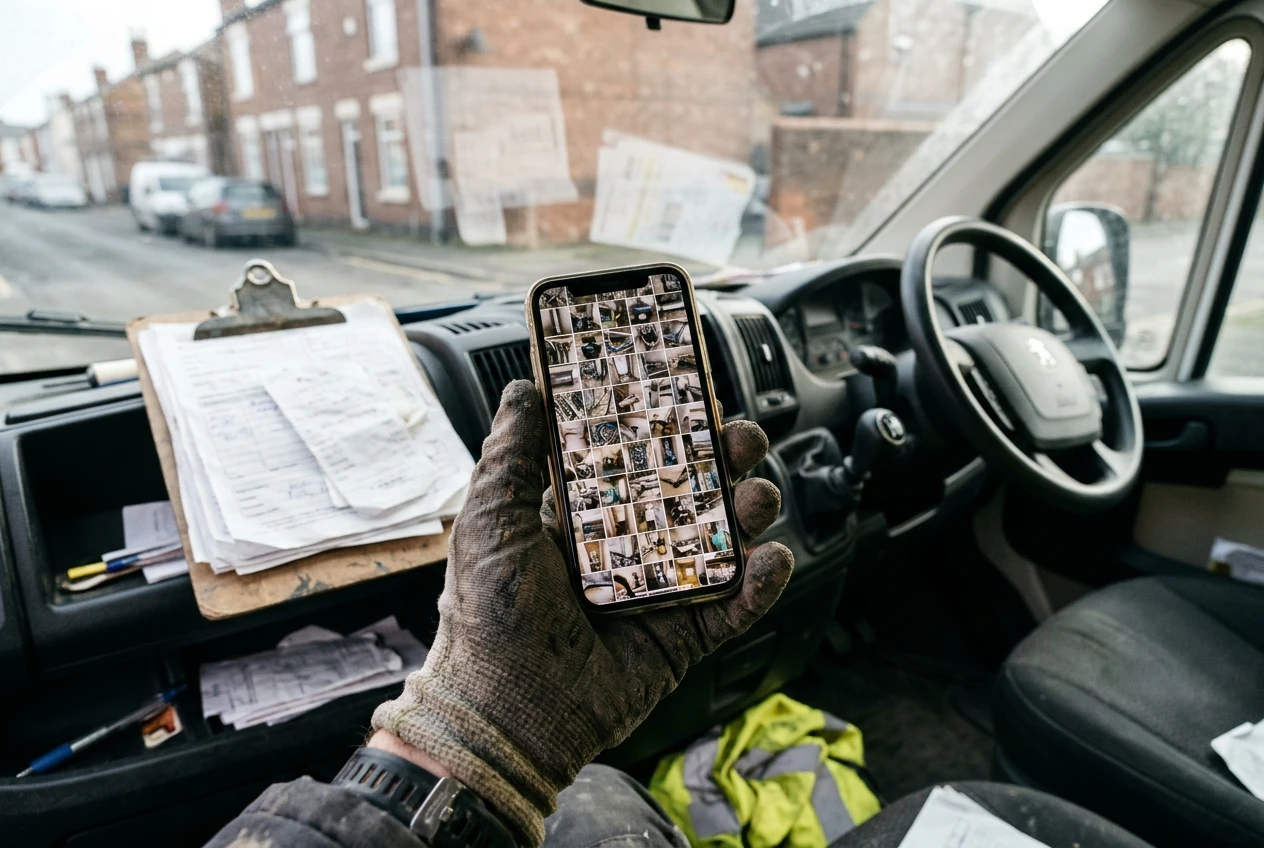
A more organised process associates photographs with individual jobs rather than relying entirely on the date they were taken.
This does not necessarily require complicated technology. The important thing is that the business has a reliable method for identifying, storing and retrieving relevant images.
Privacy and Responsible Photograph Storage
Photographs taken during trade work can sometimes contain personal information. Images captured inside a customer’s home may reveal possessions, correspondence or identifying details. Photographs taken in commercial premises might include employees, visitors or confidential information.
Businesses should therefore consider what they are photographing and whether the information is genuinely necessary for the job record.
Where photographs contain personal data, applicable data protection requirements must be followed. This may involve providing appropriate privacy information, limiting access to records and ensuring that information is not retained longer than necessary.
It is also sensible to avoid including unrelated personal details in reports shared with customers or other parties. A photograph intended to show a repaired fitting should not unnecessarily reveal private information in the surrounding area.
Professional documentation should improve business records while respecting the privacy of the people involved.
Turning Photographs Into Professional Job Reports
Photographs become considerably more useful when they are included in a clear completion report. Instead of sending a customer several images without explanation, a contractor can present the photographs alongside the job details and a description of the work.
For example, a property maintenance company repairing a damaged door might provide a report identifying the property, explaining the problem, describing the repair and including photographs of the original condition and finished result.
The customer then has a document that can be retained for future reference. If questions arise later, the business can review the same information.
A consistent reporting format also helps customers who regularly use the same contractor. When reports follow a familiar structure, the information becomes easier to review and organise.
Our article on how to create a professional job completion pack explains how photographs and supporting records can be brought together into a useful customer document.
Why Digital Job Records Make Photograph Management Easier
Digital job documentation allows photographs to be associated with the relevant customer and job information. This can reduce the need to search through separate phone galleries, messages and folders whenever a report is required.

For a sole trader, the main benefit may be convenience. For a growing company, a consistent approach can help ensure that different employees record information in a similar way.
The value becomes particularly clear when customers request details of previous work. If photographs and notes are already connected to the correct job, the information can be located more easily.
Digital records can also make report preparation more straightforward because the relevant images are already organised alongside the written information.
Our guide to digital job reports for trade businesses explains how electronic documentation can improve the reporting process.
How ProofPackUK Helps Organise Job Photographs
ProofPackUK has been developed to help UK tradespeople manage the information associated with completed work. Rather than treating photographs as separate files that must be located whenever a report is needed, the platform allows users to include images within organised job records.
Customer details, descriptions of work, notes, materials, equipment information and supporting documents can also be recorded. This information can then be brought together into professional PDF job completion packs.
For contractors who regularly provide reports to landlords, property managers or commercial customers, having a consistent documentation process can make administration easier to manage.
It also helps turn photographs into something more useful than a collection of images stored on a phone. They become part of a clear record explaining the work that has been completed.
Summary
Taking photographs during trade work is easy. Making those photographs useful months or years later requires a little more thought.
Clear images, accurate descriptions and reliable organisation can make a significant difference to the quality of a business’s records. They can help explain completed work, support customer communication and provide useful information when questions arise about previous jobs.
The most effective approach is to treat photographs as part of the normal documentation process. Take relevant images while the work is being carried out, connect them to the correct job and retain them appropriately.
When this becomes routine, photographs stop being files that are difficult to find and become useful business records.
If your phone is full of job photographs that are difficult to organise, visit www.proofpackuk.com and discover how to turn your images and job details into professional PDF completion packs.
All the best!
Eamon